DG's Corner


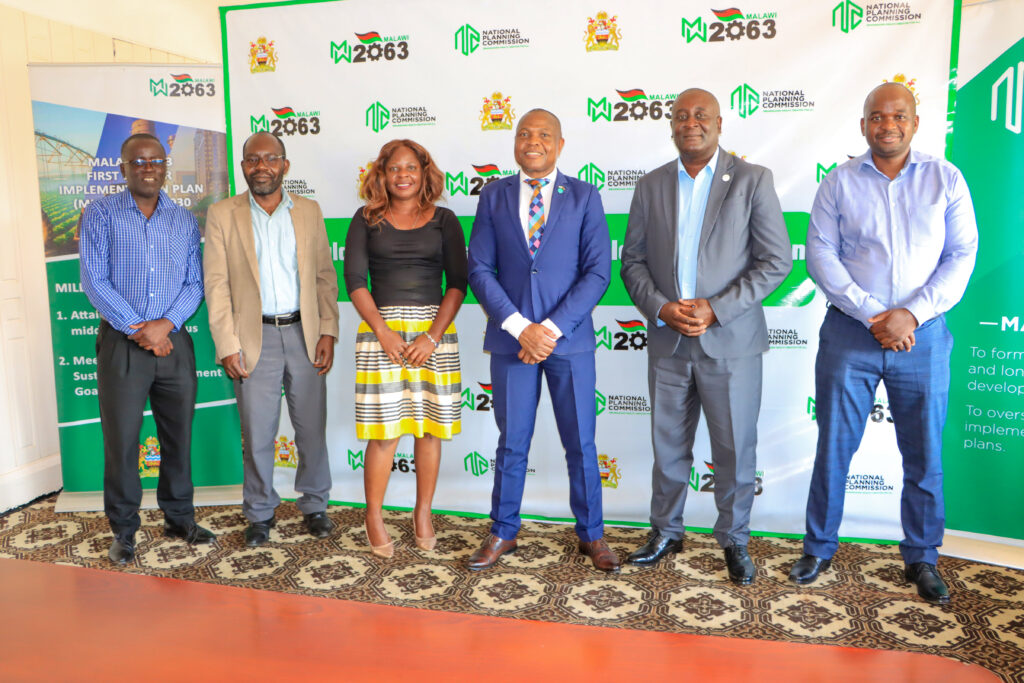
A joint team comprising National Planning Commission (NPC) and State House DPP Manifesto Implementation Team members on Thursday, December 18,
NPC Director General Fredrick Changaya (left) receiving a survey report on Justice, Human Rights and the Rule of Law in
The Director General of NPC, Fredrick Changaya, was among heads of government ministries, departments and agencies that attended the launch
Minister of Information and Communication Technology Hon. Shadric Namalomba, MP, says the Democratic Progressive Party (DPP) government is ready to
National Planning Commission (NPC) Director General, Mr. Fredrick Changaya, says Malawi should remain focused on its medium to long-term development
NPC-MWAPATA meeting
Mwapata Institute Executive Director William Chadza, alongside his team, today visited the National Planning Commission (NPC) and met its Director
United Nations Resident Coordinator, Rebecca Adda-Dontoh, today held a strategic engagement with the National Planning Commission (NPC) Director General Fredrick

Share This

A joint team comprising National Planning Commission (NPC) and State House DPP Manifesto Implementation Team members on Thursday, December 18, 2025 toured the Lilongwe Water Board in a maiden exercise aimed at tracking implementation of key national development projects in the country. The tour demonstrates how monitoring and evaluation of national development projects and alignment of Malawi Government Ministries, Departments and Agencies’ plans to MW2063 will be done. The Democratic Progress Party manifesto is already aligned with Malawi 2063.

#MW2063 #Ndizotheka

Share This

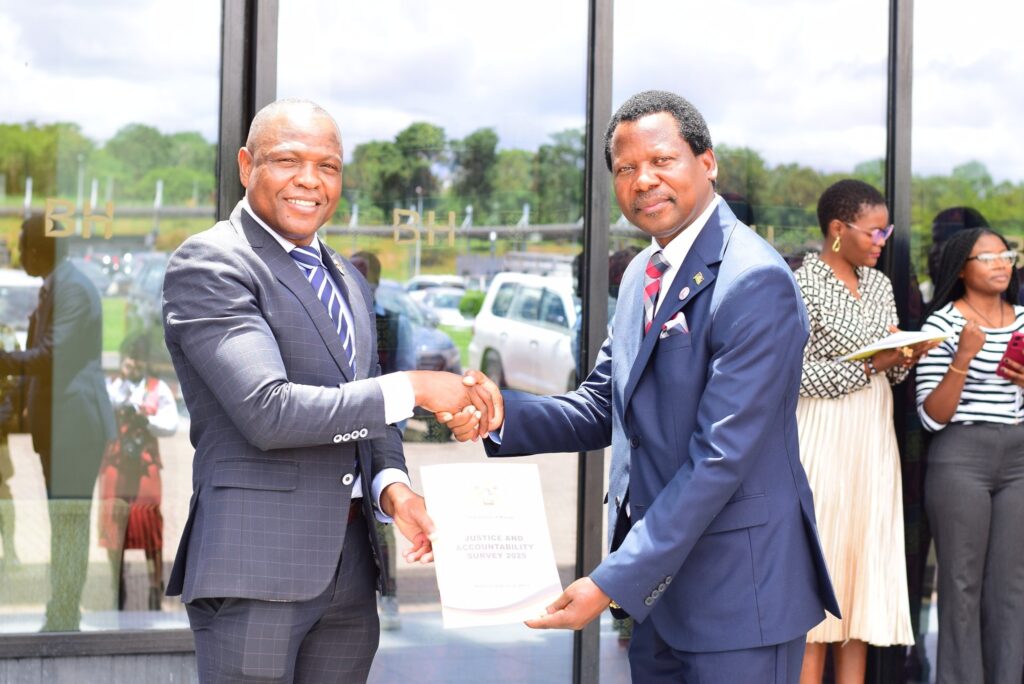
NPC Director General Fredrick Changaya (left) receiving a survey report on Justice, Human Rights and the Rule of Law in Malawi from the Minister of Justice and Constitutional Affairs, Hon. Charles Mhango. The report, which has been published by the National Statistical Office (NSO), shows that Malawi is making steady progress in those three areas in line with the Malawi 2063 Enabler #2 on Effective Governance Systems and Institutions. NPC was among the few selected key institutions that received the report from the minister during its dissemination workshop in Lilongwe this morning.

#MW2063 #Ndizotheka

Share This

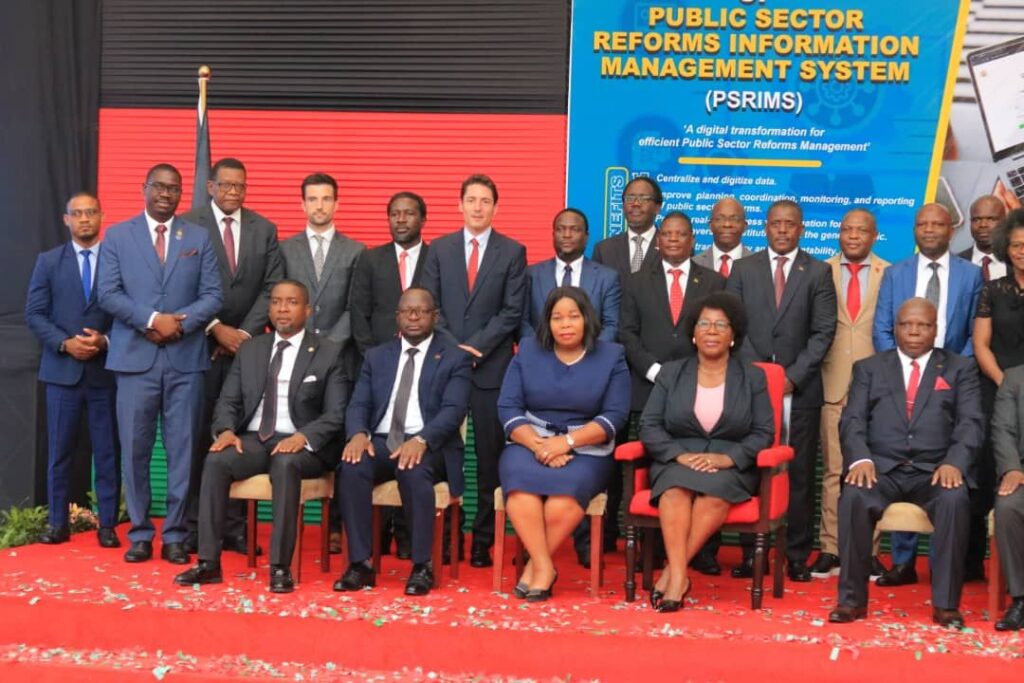
The Director General of NPC, Fredrick Changaya, was among heads of government ministries, departments and agencies that attended the launch of the Public Sector Reforms Information Management System (PSRIMS) launch by the Vice President, Right Honourable Dr. Jane Ansah, SC, at the Bingu International Convention Centre (BICC) in Lilongwe today. Several cabinet ministers also graced the occasion. In the picture Dr. Ansah (seated 2nd right) alongside ministers, the Chief Secretary, Dr. Justin Saidi, as well as heads of MDAs and missions. The PRISM aims to enhance information management and operational efficiency in the public sector, aligning with the Enhanced Public Sector Performance Enabler of Malawi’s 2063 national vision.

#MW2063 #Ndizotheka

Share This

The Director General Mr. Fredrick Change (in red necktie) alongside NPC Commissioner Dr. Betty Chinyamunyamu (in green dress) and other NPC team members with Minister of Lands, Housing and Urban Development Honourable Jappie Mhango, MP after a courtesy meeting where the issue of Special Economic Zones was also discussed.

As we chart the course for Malawi to become an inclusively wealthy, self-reliant and industrialised upper-middle-income country by 2063, it is imperative to recognise the strategic role of Special Economic Zones (SEZs) in fulfilling that vision.

Under Malawi 2063, industrialisation is a central pillar — a transformation that requires more than ambition. It needs deliberate infrastructure, enabling policy, and conducive economic environments. The establishment of SEZs provides exactly that.

The legal framework for SEZs was enshrined in the Special Economic Zones Act (2024), giving the government the authority to declare, develop, regulate, and promote SEZs nationwide.

SEZs create zones with business-friendly regulations: tax and customs incentives, duty exemptions on raw materials and capital goods, simplified regulatory procedures and streamlined investment processes.

These incentives are designed to attract both domestic and foreign direct investment investors — a crucial step to shift Malawi’s economy from raw-material export dependency to value-added manufacturing and diversified industries.

One of the recurring limitations in Malawi’s development model has been heavy reliance on raw or semi-processed exports — vulnerable to global price fluctuations and yielding limited value to the local economy.

SEZs enable processing of raw materials within Malawi, adding value and shifting exports to finished or semi-finished goods rather than raw commodities. This supports the export diversification agenda under the national plan.

Through the integration of a well-structured SEZ network and supportive trade policy, Malawi can attract manufacturing, agro-processing, and export-oriented industries — thereby strengthening both backward and forward linkages in the economy.

Economic growth must translate into improved livelihoods for our people. SEZs offer a framework for that translation. Businesses that operate in SEZs tend to be labour-intensive — manufacturing, agro-processing, logistics — creating direct and indirect employment opportunities for Malawians.

As industries grow, there will be demand for skilled and semi-skilled labour, pushing workforce development, vocational training and capacity building — contributing to human capital development.

By stimulating industrial and economic activity beyond the major urban centres, SEZs can help narrow regional disparities and support balanced urbanisation, in line with the long-term goals of Malawi 2063.

SEZs also position Malawi to better leverage regional and continental trade agreements — maximising opportunities under frameworks like the African Continental Free Trade Area (AfCFTA) by scaling up production, improving export competitiveness, and integrating into regional value chains.

By facilitating investment flows and business formalisation, SEZs can contribute to stable and predictable economic growth — a prerequisite for long-term planning and the multi-decadal horizon of Malawi 2063.

SEZs Are Central to Achieving Malawi 2063 — But Success Requires Policy, Governance & Implementation

Let us seize this opportunity — for our generation and for generations to come.

Fredrick Changaya
Director General
National Planning Commission

Share This


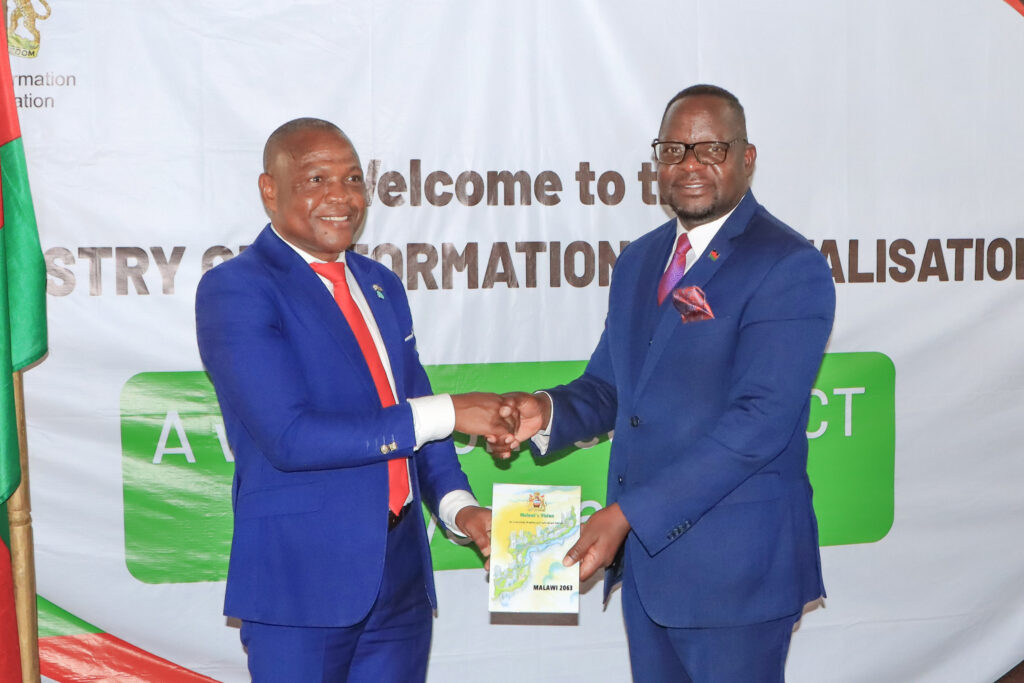
Minister of Information and Communication Technology Hon. Shadric Namalomba, MP, says the Democratic Progressive Party (DPP) government is ready to implement the Malawi 2063 national vision and has asked the National Planning Commission (NPC) to give them support in the realisation of the national vision.

Speaking today, Thursday, November 13 2025, in Lilongwe, when he met NPC Director General Mr. Fredrick Changaya and his team, Namalomba said the DPP government fully believes in the MW2063.

“The genesis of Malawi 2063 is the DPP, so it is our responsibility to ensure its realisation,” said Namalomba, adding: “The good thing is that the DPP manifesto is already aligned to the national vision, so it won’t be difficult for us to implement it.”

He said his ministry is particularly aware of the importance of digital technology and access to information in realising the Malawi 2063 vision, and that it will deploy all necessary strategies to ensure that Malawi’s transformation is anchored in information technology.

On his part, Changaya outlined several interventions outlined in the MW2063 First 10-Year Implementation Plan (MIP-1) whose implementation is in the hands of the Ministry of Information and Communications Technology.

He mentioned the Malawi Digital Economy Strategy, the Integrated Mindset Change Programme and the Access to Information Act as some of the instruments under the Ministry that are crucial in the realisation of the MW2063.

“We are living in the digital and knowledge age, and we can’t talk about transformation without ensuring that citizens have access to information technology and information,” said Changaya.

#MW2063 #Ndizotheka

Share This

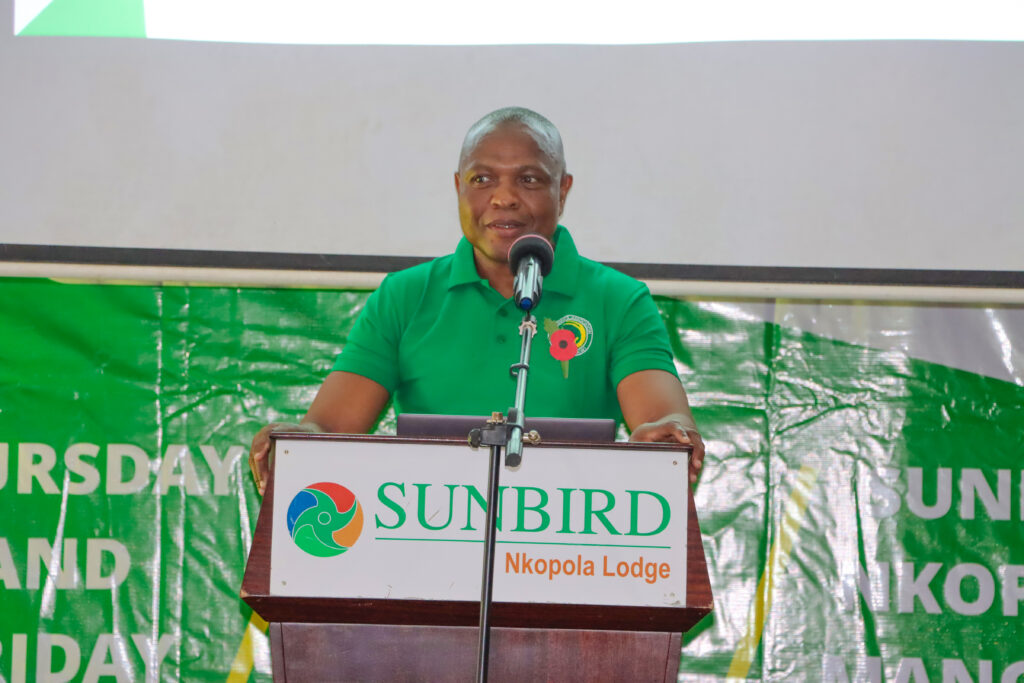
National Planning Commission (NPC) Director General, Mr. Fredrick Changaya, says Malawi should remain focused on its medium to long-term development goals as it addresses its prevailing economic challenges.

He was speaking on Thursday, October 30th, at the 2025 Economics Association of Malawi (ECAM) Annual Economic Conference, held at Sunbird Nkopola in Mangochi, under the theme “Beyond the Crises: Reshaping the Economy.”

Presenting on the sub-theme “Balancing Fiscal Discipline and Development Aspirations,” Changaya emphasised the importance of national vision and imagination in driving Malawi’s development.

He noted that without a clear vision and deliberate planning, the country risks remaining stagnant despite ongoing fiscal and policy reforms.

He also called for stronger use of evidence in shaping policies, stating that “as economists and policymakers, we must measure what truly matters. Decisions made without proper data and analysis risk misinforming national priorities and policies, leading to undermining growth efforts.”

Changaya urged the government and partners to make better use of available resources through greater coordination and focus on productive investments that directly support Malawi’s development goals.

#MW2063 #Ndizotheka

Share This

Mwapata Institute Executive Director William Chadza, alongside his team, today visited the National Planning Commission (NPC) and met its Director General Fredrick Changaya to explore further areas of collaboration in research and outreach programmes aimed at finding solutions to Malawi’s economic challenges.

Changaya hailed the meeting and emphasised the importance of strengthening research partnerships.
He noted that such collaboration and engagements will help identify existing opportunities and “quick wins” that can support economic transformation.

On his part, Chadza said the two institutions also need to jointly explore innovative approaches to resource mobilisation to help identify and implement practical solutions that enhance Malawi’s economic resilience.

#MW2063 #Ndizotheka

Share This

United Nations Resident Coordinator, Rebecca Adda-Dontoh, today held a strategic engagement with the National Planning Commission (NPC) Director General Fredrick Changaya aimed at enhancing collaboration towards the realisation of the Malawi 2063 national vision.

The meeting provided an opportunity for both parties to align development priorities and explore areas of cooperation in implementing national development strategies.

Discussions focused on Development Cooperation Frameworks, highlighting the importance of harmonizing efforts across sectors to ensure that resources and technical support from UN agencies are effectively aligned with Malawi’s national priorities.

Changaya underscored the crucial role of coordination in achieving Malawi 2063’s vision of a self-reliance, industrialised, and of an inclusive upper middle-income economy.

He commended the UN for its continued collaboration and reaffirmed NPC’s commitment to driving evidence-based planning, policy coherence, and stakeholder engagement to ensure that all development efforts contribute meaningfully to the pillars and enablers of Malawi 2063.

On her part, Adda-Dontoh described NPC as a key institution to Malawi’s medium and long-term growth, saying the UN will continue collaborating with the commission as one way of ensuring sustainable development of the country.

#MW2063 #Ndizotheka

Share This

Scroll to Top